

The cost of the average grocery bill in Canadaand how to lower yours
Welcome to MoneyFlex, our new column about the financial challenges Canadians are facing today. Each month, journalist and editorial assistant Margaret Montgomery will share expert insights and practical tips to help you flex your money skills—starting with how to tackle inflation’s effects on your groceries.
At the checkout of my local grocery store, I find myself holding my breath as the total on the screen climbs higher and higher with each scanned item. Even staples like margarine and pasta seem to teeter on the edge of unaffordability.
I’m not imagining it—these foods recently topped the list for highest month-over-month price increases. In May 2023, you could expect to pay an average of $7.46 for a 907-gram tub of margarine in Canada, up nearly 58% from the $4.73 you would have paid in the same month in 2021.
So, how much is the average grocery bill in Canada? According to Canada’s Food Price Report for 2023, a family of four will spend $16,288.41 on food this year ($1,357.37 a month)—that’s up $1,065.60 from 2022.
The rate of inflation reached its peak in June 2022 at 8.1% , according to Statistics Canada in its Consumer Price Index (CPI) report, which tracks the cost of hundreds of everyday goods, from groceries to gas. Inflation has been falling steadily ever since and it now sits at 3.4%, as of May 2023. The food inflation rate in November 2022 (11.4%) was the fastest year-over-year increase since 1981. Are we over the inflation hump? Not quite. Statistics Canada says that grocery prices increased 9% year-over-year since last May. For reference, the Bank of Canada aims to keep inflation at 2% per year, using the overnight rate, among other tools. Rising fuel costs, labour shortages and supply-chain problems have also made food pricier.
Another source of high bills at the grocery checkout: lack of competition among grocers. The Canadian Competition Bureau released a 2023 report called “Canada Needs More Grocery Competition,” in case it’s not clear. That means more new grocery retailers, and less restrictions for new stores to open up. The bureau observed a trend of “Canada’s largest grocers increasing the amount they make on food sales,” before the supply chain issues even began.
I’m not alone in my experience. Canadians are facing increasing food costs at supermarkets across the country. Nearly six-in-ten respondents (59%) in a recent Equifax survey said they “are using coupons and looking for deals more at grocery stores versus last year.” Just over half of Canadians (54%) are “cutting back on grocery shopping altogether.” And, alarmingly, a survey by the Canadian Hub for Applied and Social Research at the University of Saskatchewan found that almost 20% of us are eating smaller meals or skipping meals because of high food prices.
In July, more than 60% of respondents to our social #poll were either shopping at new/various stores or buying more store brands to cope with higher #grocery costs.
— MoneySense (@MoneySense) December 2, 2022
Is couponing something you do or would consider?
What’s the average grocery bill in Canada?
Food costs are rising—how much more you’ll spend will depend on your age, sex and location. Canada’s Food Price Report, prepared by researchers at four Canadian universities, tracks the annual cost of food in Canada based on retail grocery prices and restaurant prices. The average food cost per month for a woman aged 19 to 30 years old (that’s me) was about $297 in 2022. That’s $3,564 per year. Men in the same age group spent $529 more for the year, at $4,093 total. A family of four (two adults and two kids, aged 14–18 and 9–13) spent an average of $15,223 for the year. Older adults spent less on food than younger adults; in 2022, women aged 70-plus spent an average of $3,273, while men aged 70-plus spent $3,637.
Across all provinces, food price inflation from 2021 to 2022 averaged about 10.5%. Increases varied, from a high of 11% in Quebec to a low of 9.2% in B.C.
The report also predicts that overall food prices in Canada will continue to rise by 5% to 7% in 2023. Sigh.
So, how can you save money on groceries?
I can’t change the price tags at the grocery store, but I did get some money-saving advice from Liz Schieck, a Certified Financial Planner at the New School of Finance.
How to budget for groceries
Budgeting for everyday expenses like groceries is essential. Without a budget, you might start dipping into funds needed for your must-pay bills or emergency savings.
Budgeting doesn’t have to be an extremely complex exercise, and you don’t necessarily need a fancy Excel spreadsheet to do it. “The only budget anybody ever really needs is one that separates the money they can spend from the money they can’t spend,” Schieck says.
She recommends drawing a hard line between your bills—think debt payments, rent and/or utilities—and your everyday spending on things like groceries, gas and takeout food.
“For most people, I suggest lumping all the day-to-day spending in together,” Schieck says. “If you eat out more in one week, you’ll have less money for groceries, or vice versa. Set yourself a weekly spending limit for everything and then try to stick within that.”
Cash stuffing is a viral budgeting method used to limit spending and divide up funds. The idea is that after you allocate part of your income into must-pay categories like rent and utilities, you withdraw the remainder of your paycheque in cash. Then, using envelopes or a cash-stuffing binder with separate pockets, you set aside cash for everyday expenses like groceries, gas and takeout food. You can look at the average grocery bill for your age group to determine a reasonable amount to set aside each month.
I use different bank accounts and cards to manage spending and saving. My salary is deposited into my chequing account. I use that account to pay my monthly bills like utilities and/or my credit card bill. Then I transfer a small amount (usually $50 to $100) of my paycheque to my high-interest savings account, which I use as my emergency fund and to save up for trips or pricier one-time purchases. I use the amount that is left over in my chequing account for weekly spending, including groceries, which I pay for with a debit card connected to the account.
If you prefer to use your credit card for daily expenses like groceries, be sure that you are earning rewards points or cash back. I prefer to limit my card usage to subscriptions and occasional online purchases, as it’s easier for me to track spending this way. Each time I get paid, I know roughly how much I’ll need for groceries, restaurant meals and other spending until my next paycheque.
Money-saving meal planning tips
Schieck says the two ingredients of smarter grocery shopping are planning and being realistic.
Planning at least a few meals each week will help you avoid relying on takeout and overbuying groceries, which can lead to food waste if ingredients expire or spoil. Here’s how you can plan effectively:
- Schieck recommends first deciding which dishes you will prepare during the week. This is where being realistic comes in; if you are likely to get tired of cooking by Thursday, maybe plan to make three meals total.
- Check what you already have in your fridge and pantry. Is there some pasta or rice sitting in the back corner that you could build a meal around?
- Then make a shopping list for what you need.
“I also recommend keeping a few things in your freezer that are easy enough to cook and that might help you avoid overspending on takeout,” Schieck says. “Frozen fish and fries have saved me from ordering in more times than I can count.”
Consider keeping some form of protein and veggies, such as frozen chicken, meat substitutes and stir-fry veggie mixes, in your freezer to help make it quick and easy to prepare healthy meals.
Bulk buying—the right way to do it and lower your grocery bill
Shopping at bulk-food stores can help cut costs because prices are often lower per unit than the typical packaged foods (for one thing, there’s less packaging), and you can buy just the amount you need.
A habit I’ve picked up is buying staples like oats, walnuts and chia seeds in bulk. They usually last me months for my morning oatmeal, and they save me money on my weekly trips to the grocery store.
Buying in bulk makes sense financially if you can use up the product before it expires. The same goes for shopping at a wholesale retailer like Costco—split those super-sized products with a friend.
Compare pricing per unit, not per product, to save money
To compare similar items at the grocery store for value, Schieck says to look for the price per volume. “The price might say $3.99 and then in the fine print below it will say $0.80/100 g, for example,” she says. That figure is the price per volume, or price per unit. “It’s a great way to comparison shop between brands and different package sizes in the moment without doing advance research.”
More ways to save on groceries
In my quest to save money on groceries, I found a few solid tips you can use to improve your food-buying habits.
- Fresh produce is often less expensive when it is in season. Consider frozen fruit and vegetables when produce is out of season—they’re convenient and just as nutritious.
- Ever use half a jar of tomato sauce and didn’t know what to do with the rest? Freeze it for up to six months. Learn how to store your food properly and extend the life of fresh foods in your fridge or freezer and prevent waste.
- Use flyer apps like Flipp to compare deals at grocery stores in your area. Some loyalty programs also feature in-app flyers and offers you can opt into.
- Minimalism is a buzzword, but its principles are simple and helpful for avoiding food waste. Buy only what you need, buy items that last longer (like bulk items that won’t expire quickly) and use what you already have in your fridge, freezer or pantry.
- Making food at home is cheaper than buying prepared and processed foods. Think of grated cheese, for example—buying it might save you some time, but it’s usually more expensive than getting a bar of cheese and grating it at home. (Remember to compare the price per unit!)
- Get discounts with loyalty programs. I’m a fan of the PC Optimum program, which gives me points for my everyday purchases, including groceries. I redeem my points for cash back (currently, 10,000 points for $10) at grocery stores (Loblaws, Valu Mart, No Frills and others). I use the PC Optimum app to get my digital loyalty card scanned at the checkout. Some debit cards allow you to link your spending directly to a loyalty or rewards program so you can earn at an even higher rate.
- Consider a cash back credit card or grocery rewards credit card. If you use your card consistently (and pay your bill in full and on time to avoid accumulating interest charges), you can really rack up rewards, since groceries are a regular expense.
- Consider trying meal kits rather than relying on takeout, especially if you’re not so comfortable in the kitchen. Meal kits are priced at a bit of a premium, but most companies offer introductory discounts on up to four weeks of boxes. Each box contains recipes and ingredients for two to five meals, serving two or four people, depending on what you pick. Meal kits work for me, personally, because the expense is predictable and I can budget for it—not to mention I can avoid food waste because the kits contain exactly the amount of ingredients I need. Subscriptions are also flexible—you can skip a delivery if you don’t need it.
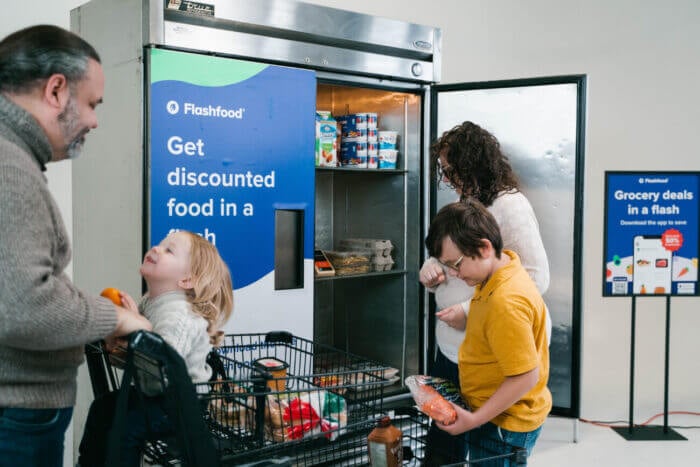
- Get a food rescue app. With Flashfood, for example, grocery items are discounted up to 50%. “As consumers, when we go grocery shopping, we’re always reaching at the back for whatever has the longest shelf life,” says Flashfood founder and CEO Josh Domingues. The unsold, near-date food that remains is then pulled by grocers and posted on the app. Other food rescue apps include Olio and Too Good To Go. Too Good To Go offers discounted food from restaurants, bakeries and gourmet grocers.
Final thoughts
One of my goals for 2023 is to create a meal plan before I build my grocery list. Buying intentionally could help me save money, though I will have to commit to allocating time to this every week. When I’m not as mindful when grocery shopping, I can end up overspending and wasting food.
I hope these tips help you reduce the impact of rising food costs. Try different strategies to see what works best for your schedule and your budget. And if you have more money-saving tips, share them below!
Read more about budgeting:
- How to talk to your partner about money
- Working towards your dream lifestyle? Here’s how financial goals can help
- Take control of your finances with these budgeting tips for young adults
- Tools and habits to stay on track with your money goals
The post The cost of the average grocery bill in Canada–and how to lower yours appeared first on MoneySense.
No comments