

Untangled Money’s Kristine Beese on why financial plans aren’t gender-neutral
Kristine Beese didn’t originally set out to disrupt Canada’s financial planning industry. She began her career as an engineer in the oil and gas sector, but after a bad experience with a financial advisor at a bank, she was inspired to learn how to manage her own investments. Beese went back to school, earned an MBA and started a new career in the finance industry.
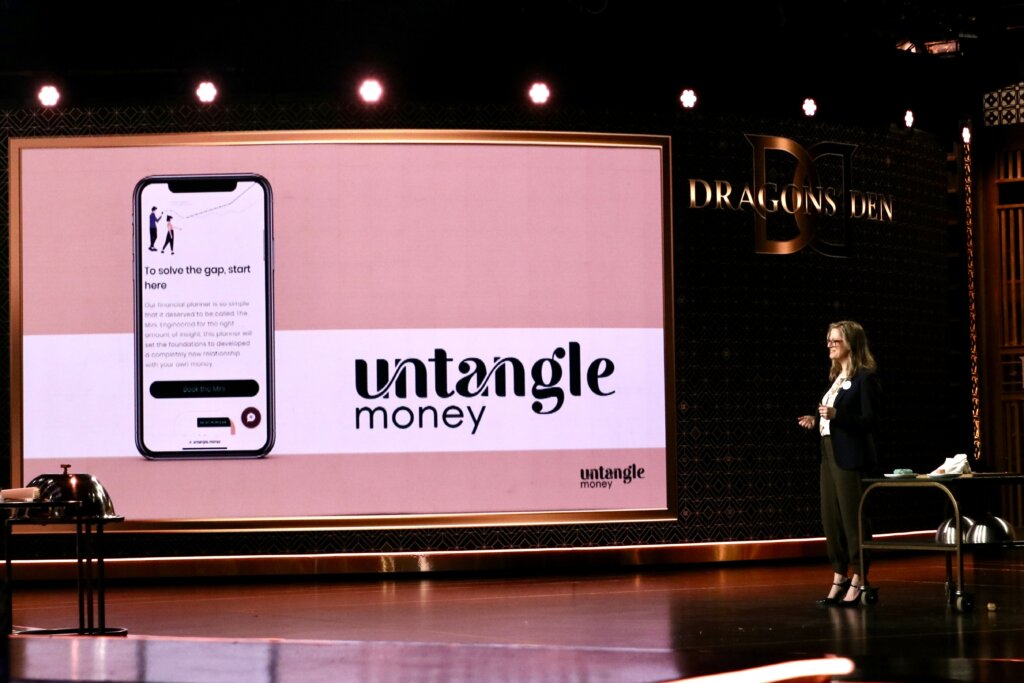
For 10 years, she worked with institutional investors and accredited investors (professional investors and those with a net worth of at least $1 million). Over time, Beese became increasingly frustrated by how the financial system fails to meet the needs of women. In 2020, she launched Untangle Money, an online platform that makes high-quality financial planning services more accessible and affordable for everyday women. Its ambitious goal: “We want to get an effective financial plan into the hands of 1 million Canadian women in the next four years.”
Beese herself is working towards becoming a Certified Financial Planner. We asked her to share her investing heroes, her perspective on debt, and how she invests for short-term goals.
You started Untangle Money to help women create financial plans that reflect their earning power, life events and retirement goals. How are women underserved by the financial system?
For regular Canadian women, there aren’t a lot of great options for getting help with financial planning. For one thing, financial plans are sold as gender-neutral, but the World Economic Forum has stated that if women use plans designed for men, they will fall short in retirement—which is exactly what’s happening around the globe. A third of senior single women in Canada are considered low-income, according to Statistics Canada. The largest investment firm on the planet, Blackrock, agrees with the Forum, stating that the retirement crisis is a women’s crisis.
Second, if you go to a bank branch, financial advisors—salespeople with fancy titles, dressed in suits—will sell you some of the most expensive financial products in the world. Add to this that most high-net-worth individuals are men, so women don’t have as much access to the wealth management industry, where many advisors require clients to have at least $300,000 in financial assets to qualify for services. (Amongst the 100 top-earning CEOs in Canada, there are more men named Mark than there are women, according to the Canadian Centre for Policy Alternatives.)
Lastly, fee-for-service financial planning and advice are great options, but most Canadians can’t afford the $2,500 average price tag, especially when best practice is to use these services every year or two. And very few of these providers have systems that can handle incorporating a maternity leave or a downsizing of income to accommodate elder-care responsibilities.
We’re changing that. We recently launched Untangle MINI, a financial planning session that focuses on women’s two most important money metrics: their “now money” and their “future money.” It costs $499 plus HST. We’re also launching an automated version of the Untangle MINI on International Women’s Day 2024. It will retail at $100 plus HST.
Who are your money and investing heroes?
I have so many, but my top six would be:
- Hetty Green was one of the greatest investors of all time, and no one knows about her. She personally bailed out New York—lending the city money when banks wouldn’t—on three occasions, and she gifted money to the Johns Hopkins medical school on the condition that it start admitting women.
- Geraldine Weiss was the first woman to start an investment advisory service, and she focused on investing in dividend stocks. She signed her newsletter, Investment Quality Trends, with “G. Weiss” to avoid the pitfalls of her gender.
- Warren Buffett, because he shares so much wisdom and transparency in his free annual reports, and they were a foundational element of my investment education.
- Sallie Krawcheck, who founded Ellevest, a robo-advisor centred on serving women. When she worked at Citibank, during the financial crisis, she argued that they priced their products incorrectly, and she wanted to refund investors. This viewpoint, which I agree with, cost her the job at the time. She has also pioneered the conversation around women and money.
- Closer to home: Tom Bradley from the Canadian investment firm Steadyhand. His books break down investing in plain language, and his company enables average Canadians to invest in funds usually limited to high-net-worth individuals.
- Shannon Lee Simmons, founder of the New School of Finance, has some of the best and most practical books on money and debt I’ve had the pleasure of reading.
How do you like to spend your free time?
As a startup founder and mother of three, I don’t have a lot of free time. When I do have a free moment, I try to find a balance between trying new things and visiting old favourites, be that a book, going climbing or cycling, or meeting up with friends.
If money were no object, what would you be doing right now?
What I’m doing now, except I’d expand Untangle Money faster and do it from different places in the world. I love travelling and the freedom that comes with remote work. I would also love to go back to school because I love learning.
What was your first memory about money?
My first memory of money is my parents’ money rules: Always pay your credit card off in full. Buying better quality once is better than buying poor quality several times (mostly to do with kitchen knives and pots and pans, but also extends to clothing and furniture). Save up for what you want before you buy it. When it comes to art and wine, there are excellent options at every price point—you never need to spend beyond your means on these items.
On one hand, I wish they had shared with me how expensive life can be, and how hard it is to make financial choices when none of the options seem like good ones. On the other hand, I learned that financial decisions are everywhere, and most of their lessons served me really well. These lessons also taught me that money is a tool which, when used wisely, can help you live the life you want to live—and that being conscientious about how you use it can help you align your spending with your long-term goals.
What’s the first thing you remember buying with your own money?
The first thing I bought was a trampoline. I was nine. I saw it in Costco one weekend, and I saved all the money I received until I could buy it. It felt great to be able to purchase something I wanted so much. I used it well into my teenage years.
What was your first job? How did you spend your first paycheque?
During university, I worked at the front desk of a golf and tennis club called The Landings. I also worked the bar during the ladies’ and men’s golf nights. My first paycheque probably went to cable, food and drinks—that’s what I was responsible for in the house I rented with five other students.
What was the biggest money lesson you learned as an adult?
When I bought my first car, I bought it new, and I didn’t realize you could negotiate the price of cars. It was a very costly mistake, and it made me angry for several years. My friend went to different car dealers and kept asking for their best price, then asking if the other dealer could beat it. And she paid about the same for a much nicer car.
And it was only later that I realized that my car wasn’t something that brought me a lot of joy. I could have gotten a more affordable used car for a lot less and prioritized spending my money on travelling or something else I really enjoy and that would’ve been a better use of my money.
What’s the best money advice you’ve ever received?
Warren Buffett famously said, “If you look after the pennies, the dollars will take care of themselves.” I always find that if I challenge myself to be creative and find a way to do things for less money, not only am I happier with the outcome, because I actively created it, but I’m surprised what I can do for less money.
What’s the worst money advice you’ve ever received?
The worst money advice I ever received was “Don’t worry about it, it will all sort itself out in the end.” This is patently untrue, and it abdicates your ability to steer your own life in the direction you want. This is a way to cede all control and be at the mercy of others.
Would you rather receive a large sum of money all at once or a smaller amount of money every week/month for life?
All at once. I’m confident in my investment skills, and I think I could make more money that way. However, getting a smaller amount of money every week for life is a gift, especially if it increases with inflation.
What do you think is the most underrated financial advice?
There are two. First, how important it is to think about your financial future right now. Thinking that money is something you can learn about or deal with later is a huge mistake. I’ve heard so many financial professionals say things like, “Let’s not kid ourselves, people don’t think about retirement until their 40s. Let’s talk about the house, the car, the kids and the things they’re focused on.”
This is such a bad point of view. So many Canadians won’t be able to reach their retirement needs if they don’t start when they’re young. As financial professionals, we have the tools to show them this, and we should be showing them this, so they can make the best financial decisions.
The other underrated piece of advice is to take advantage of employers’ matching programs for RRSPs, pensions and employee stock ownership. For most people, these programs are a meaningful component of their compensation and a great accelerant towards achieving their long-term goals, and Canadians are leaving billions on the table.
What’s the biggest misconception people have about growing money?
That you can either save your way to retirement or invest in a conservative portfolio to reach your retirement goals. Unless you start really young, or have a bit of luck, or have generational wealth, a conservative portfolio doesn’t work hard enough to create a retirement fund that will last until 95.
Can you share a money regret?
I regret thinking that working for a big corporation would be more lucrative than working for myself. After graduation, I started out as a contractor. I had great clients, I grew my business and I hired people to help me with the work I brought in. But for some reason, I felt like I was missing out on the prestige of working for a large, respected brand. I also thought it would be more financially rewarding and less work.
Now, I don’t want to say that I didn’t earn good money in banking. It was a high-paying job. I was even able to break into the capital markets industry and experience it first-hand. However, it didn’t pay as much as I’d earned when self-employed, and it was more work, it felt less secure and it had no flexibility. You needed to be present literally all the time. Top it all off with a terrible cultural environment I was immersed in 10 to 14 hours a day. I don’t think it was worth it financially.
What does “value” mean to you? What is something you don’t mind spending money on that someone else might not?
To me, the word “value” means I’m getting a lot of emotional return for my money. Right now, I like spending money on a house cleaner. With three children, cleaning the house is a never-ending chore for me and my husband. It’s an incredible gift to ourselves to come home to a clean and tidy house every few weeks.
What’s the first major purchase you made as an adult? What purchase took the longest to decide to buy?
The first major purchase I made as an adult, aside from my car, was my first condo. I spent a lot of time learning about and understanding the condo market in Calgary.
Surprisingly, the purchase that took me the longest to decide to buy was an iPhone. My family is a PC family, and they value the customization PCs are known for. For myself, the iPhone’s usability and style were more valuable. I was a late adopter, but it was still an oddly difficult decision.
What’s your take on debt?
High-interest debt should be paid off as soon as possible and avoided. Some debt is good, but all debt can lead to the “debt spiral,” which we want to avoid. The debt spiral is when a relatively small increase in our debt level doesn’t seem like much because we’ve already gotten used to the overall debt amount. For example, as a student I racked up $100,000 of debt, so the idea of adding $1,000 here and $1,000 there didn’t seem like a big deal. This is when money works against you, and it’s working instead for the person lending the money.
What was your most recent splurge?
I don’t like the term “splurge” because it romanticizes the concept of spending money unconsciously. It takes something that should be seen as a warning signal and turns it into a normal occurrence. If you feel the need to splurge or spend without restriction, it’s an indication that you probably need to make changes to how you allocate your money.
When you spend without proper reflection, or as a way to manage your emotions, at Untangle we call this “F@ck It Money.” Splurging is often directly opposed to what you’re hoping for yourself financially, and it often means that the way you’re spending your money isn’t aligned with your needs.
Here’s how I would reframe this: recently my husband and I realized we weren’t spending as much time together as we needed to feel connected. To address this, we adjusted where we were spending money, we brought in a babysitter, and we had a few date nights. To make room for those expenses, we cancelled some apps and subscriptions and cut back on gym classes.
What’s the last money-related book you read? What did you think of it?
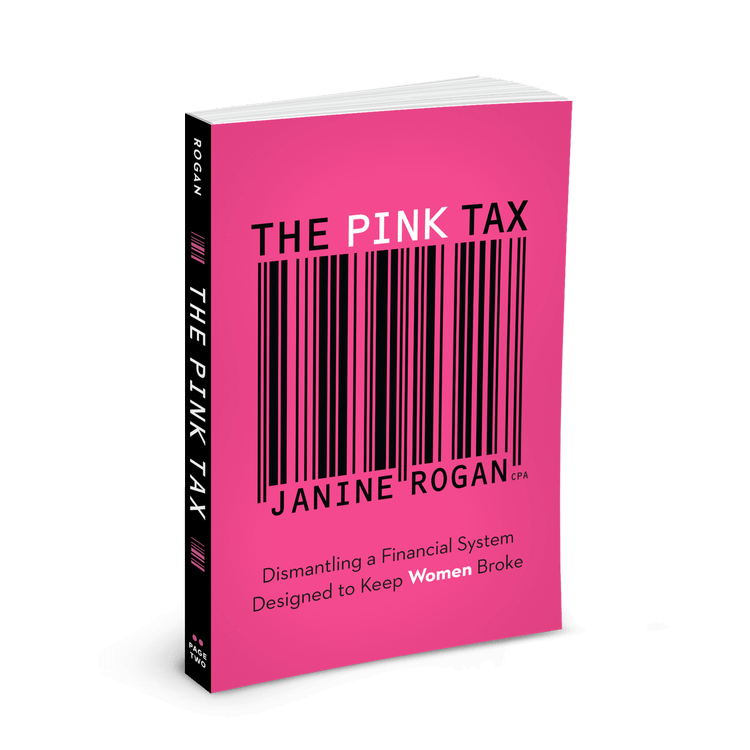
The Pink Tax by Janine Rogan (Page Two Books, May 2023). Such a great read. It combines frustrating information about the price gouging that women experience when they purchase products and services, with excellent financial insights, tips and tricks. Janine Rogan does all of this with a refreshing, wry and honest sense of humour.
What’s your favourite possession?
Currently, the coffee urn my husband bought me for our 11th anniversary. It keeps my beverages warm all day, and I can refill my cup while I’m in a Zoom meeting. It’s gorgeous, and it makes me smile every time I use it.
Quick questions
Rent or own?
It depends. I’d like to own a home for the long term, and to keep it as a rental property if I move elsewhere. I’ve done this before, and I hope to again.
Buy or lease?
My preference is to buy used. It’s better for the environment and the pocketbook. If it’s a car, treat it well and drive it as long as possible.
Save or invest?
Overall, invest. For short-term necessities (less than two years), I’ll save in a high-interest savings account or use laddered GICs. But generally, I don’t mind having a flexible timeline. I prefer to invest and time my big expenses for when markets are high.
Budget or not?
I like a high-level budget. I find it too administrative to manage a detailed budget, but I like knowing my limits. For example, I like knowing that I earn $X in “Flex Money” for every hour I work, so I can spend freely and decide if something is worth it to me (“Do I want to work five hours to buy this item?”).
What is “Flex Money”? Imagine a square—this represents your take-home pay. We fill it up from the bottom, starting with the money you’ve committed to spending before you’ve even gotten out of bed, like your rent/mortgage and subscriptions. Then we add the money you need to put towards retirement. The amount that’s left over is your Flex Money. This is what you can spend on food, clothes, gifts, etc. If you figure out this number for every hour you work, you get Flex Money per hour. To get an estimate, divide the annual amount by 2,000, the approximate hours of working a full-time job for a year.
What’s your next money goal?
Saving for an extended trip with my family. My husband and I both love backpacking, learning about different cultures and having new experiences. We want to take a year off and figure out how to work/hack/shoestring our way around the world to expose our kids to what’s out there.
More from My MoneySense:
- Doretta Thompson on the smart way to pay for “experiences” and other money tips
- Mallory Greene on building wealth, leveraging debt and spending without guilt
- Reni Odetoyinbo on why you should pay yourself first and have multiple streams of income
- Mixed Up Money’s Alyssa Davies on striving for CoastFIRE, the value of time, and more
- Tennis star Vasek Pospisil on seizing investment opportunities and living without regrets
The post Untangled Money’s Kristine Beese on why financial plans aren’t gender-neutral appeared first on MoneySense.
No comments